


Jicama is a crisp, mildly sweet root vegetable, also sold as yam bean, with about 3.9 g of available carbohydrate and 4.9 g of fibre per 100 g raw. That makes it a low-carb, low-kilojoule swap for potato. No GI value has been published for it, and a half-cup (70 g) serve is low FODMAP.
Jicama is not in the Australian Food Composition Database, so these figures come from the US Department of Agriculture's FoodData Central. Here is how it compares with the vegetables it usually replaces, using Australian data for those.
| Food | kJ | Available carbs | Fibre |
|---|---|---|---|
| Jicama, raw | 159 | 3.9 g | 4.9 g |
| Carrot, raw | 145 | 6.6 g | 3.2 g |
| Water chestnut, canned | 218 | 9.3 g | 2.7 g |
| Potato, boiled | 245 | 10.9 g | 1.7 g |
| Sweet potato, baked | 333 | 16.1 g | 3.2 g |
| Apple (for comparison) | 242 | 13.1 g | 2.5 g |
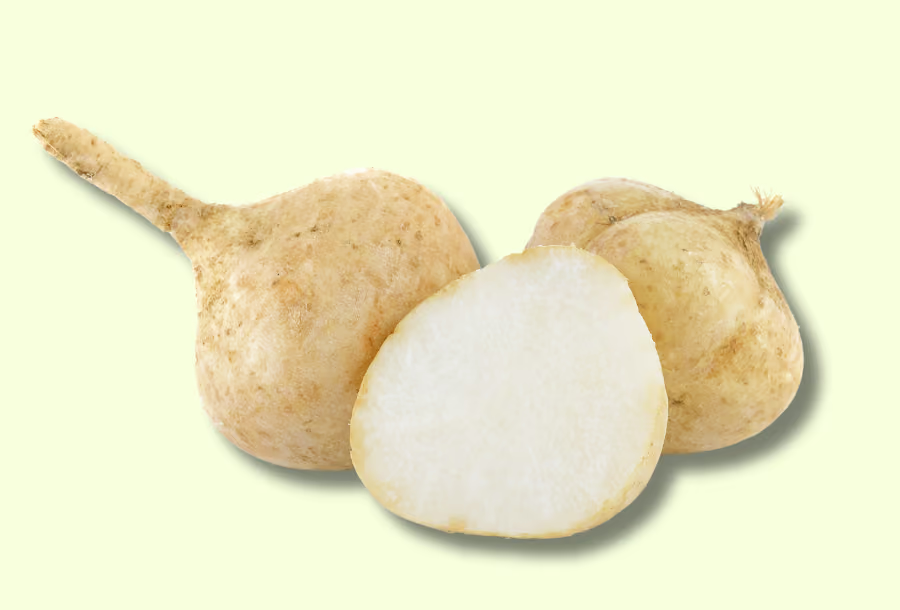
Jicama (say HEE-ka-ma) is the swollen root of a climbing plant in the bean family, native to Mexico and Central America. It has a thin, papery brown skin and crisp white flesh. Only the root is eaten.
Raw, it tastes like a cross between an apple, a pear and a water chestnut: juicy, crunchy and only slightly sweet. Cooked briefly, it stays crisp, which is why it works in stir-fries the way water chestnuts do. In Asian grocers it is often labelled yam bean.
Raw jicama has about 3.9 g of available carbohydrate per 100 g, the carbohydrate your body digests to glucose. US sources list 8.8 g because American labels include fibre in total carbohydrate. Australian labels list fibre separately, so 3.9 g is the comparable number.
Fibre makes up more than half of jicama's carbohydrate: 4.9 g per 100 g. That is more fibre than the same weight of carrot, potato or apple. A 130 g cup of sliced jicama gives about 5 g of available carbohydrate and 6 g of fibre for around 210 kJ.
“A diet rich in fibre from vegetables, fruits, whole grains, berries, nuts and legumes helps regulate blood sugar levels.”
Dr Michelle Woolhouse, Vively Medical Director
Jicama also brings vitamin C: 20 mg per 100 g, about 45% of the 45 mg a day the NHMRC recommends for adults.
Yes, jicama is a sensible choice if you have diabetes or prediabetes. With under 4 g of available carbohydrate per 100 g, even a generous serve carries very little glucose load, so you can treat it like other non-starchy vegetables. It is most useful as a swap for higher-carb foods such as potato, rice or crackers.
What jicama does not have is a tested glycaemic index (GI). We searched the University of Sydney GI database for jicama, yam bean and its botanical name, and found no entries. Any website quoting a GI number for jicama is estimating, not reporting a test.
Claims that jicama lowers diabetes risk or blood sugar come mostly from animal studies. Human evidence is thin. The honest summary is that jicama is a low-carb, high-fibre vegetable, and low-carb, high-fibre vegetables are good for glucose.
Only 3 Vively members have logged jicama with a continuous glucose monitor (CGM), and we publish food figures only when at least 30 members contribute. We do have solid data on the starchy foods people swap it for.
Swapping some of those carbs for jicama lowers the carbohydrate in the meal, which usually means a smaller rise. Replace half the potato in a salad with jicama, or have jicama sticks with dip instead of crackers. See how members respond to sweet potato, and read our posts on the GI of potato and the GI of sweet potato for more on those swaps.
“Remember, we're in no way demonising carbohydrates, they are an essential macronutrient!”
Dr Michelle Woolhouse, Vively Medical Director
Jicama earns a place because it is crunchy, filling and low in carbohydrate. Potatoes and rice still fit a healthy diet in sensible portions.
Yes, in moderate serves. Monash University, which runs the main FODMAP testing program, rates half a cup (70 g) of jicama as low FODMAP, according to FODMAP Everyday's summary of the Monash results. It is not considered high FODMAP until you eat more than three times that amount, about 210 g.
If you have irritable bowel syndrome (IBS), start with the 70 g serve and check the Monash FODMAP app for the current rating, since serves are updated when foods are re-tested.
Jicama has no special night-time benefit. It is a good evening snack for a practical reason: a cup of it is crunchy and filling for around 210 kJ, which makes it an easy swap for chips or biscuits after dinner. If large raw serves make you bloated, keep evening portions small.

Look in Asian grocers and some greengrocers, where it is often labelled yam bean. Choose firm, heavy roots with dry, unblemished skin and no soft spots. Store whole jicama in a cool, dry place; once cut, wrap it and keep it in the fridge for a few days.
For more ways to fill your plate, see our top 10 low GI vegetables and our guide to carbohydrates and the GI.
Tables and GI lists describe the average person. Your own response can be quite different. The Vively CGM program pairs a sensor with the app, so you can test jicama against potato, rice or bread and see what each does to your glucose, with dietitian support to turn that into meals you enjoy. If you want to know where your blood sugar stands first, the Baseline Health Check measures 70+ markers, including HbA1c and fasting insulin, against optimal ranges. Read more about how a continuous glucose monitor works.
Wear a CGM for 14 days and see how jicama, potato, rice and the rest of your meals shift your glucose, with dietitian support in the app.
Yes. Raw jicama has about 3.9 g of available carbohydrate and 4.9 g of fibre per 100 g, so it adds very little glucose load. Treat it like a non-starchy vegetable and use it to replace some potato, rice or crackers. No GI has been published for it, and anyone on diabetes medicines should keep following their care team's plan.
About 3.9 g of available carbohydrate per 100 g raw, plus 4.9 g of fibre. US sources say 8.8 g because American labels count fibre as carbohydrate. A 130 g cup of sliced jicama has roughly 5 g of available carbohydrate, compared with about 14 g in the same weight of boiled potato.
Yes, in a half-cup (70 g) serve. Monash University's testing, as summarised by FODMAP Everyday, rates that serve low FODMAP, and jicama is not considered high FODMAP until you eat more than about 210 g. People with IBS should start small and check the Monash FODMAP app for the latest rating.
Jicama is usually sold as jicama or yam bean in Australia, most often in Asian grocers and some greengrocers. It is a different plant from the yams and sweet potatoes in supermarkets, although the names overlap. Look for firm, heavy roots with dry, unblemished skin.
Yes. Raw is the most common way to eat it. Peel off the brown skin and eat the white flesh in sticks, slices or slaws. Only the root is eaten. Raw jicama stays crisp for several days in the fridge once cut, which makes it handy for lunch boxes and snacks.
START YOUR BASELINE
Vively includes a Baseline Health Check with 70+ biomarkers, a results report and practitioner support in the $99 a month membership. No minimum term.
Explore Baseline Health CheckSubscribe to our newsletter & join a community of 30,000+ Aussies

Start a PCOS assessment with your GP. Learn which blood tests matter, when ultrasound or AMH is useful, and how contraception affects results.


Know what to do about an unexpected high blood sugar reading, when to seek urgent help, and which everyday habits support longer-term glucose care.





Vively is a general wellness platform and does not provide medical advice, diagnosis, or treatment. Any information, insights or guidance offered through our app, website, programs, or coaches is for educational and informational purposes only and should not be considered a substitute for professional medical advice or care. Always consult a qualified healthcare provider before making any health-related decisions.
We acknowledge the Traditional Custodians of the lands where we live and work, the Gadigal of the Eora Nation. We pay our respects to their Elders past and present.
 Share
 Tweet
 Share