
Home / Blog /

What is biological age?

What is biological age?
Start here

What is biological age?

July 20, 2026

Unlock Weight Loss With a Comprehensive Blood Test & Personalised Treatment Plan

Only 50 spots left in September - reserve your spot now for free.

  • Discover why your body is holding onto weight
  • Get a doctor-led plan tailored to your biology, including medication if suitable
  • 1:1 coaching to build habits that drive long-term sustainable weight loss
On this page

Biological age is an estimate of how your body is ageing compared with your chronological age.

Your chronological age is simple. It is the number of years since you were born.

Your biological age is different. It looks at how your body is functioning internally. It can be influenced by inflammation, glucose regulation, liver health, kidney function, blood health, nutrients, lifestyle, stress, sleep, fitness and long-term health risk.

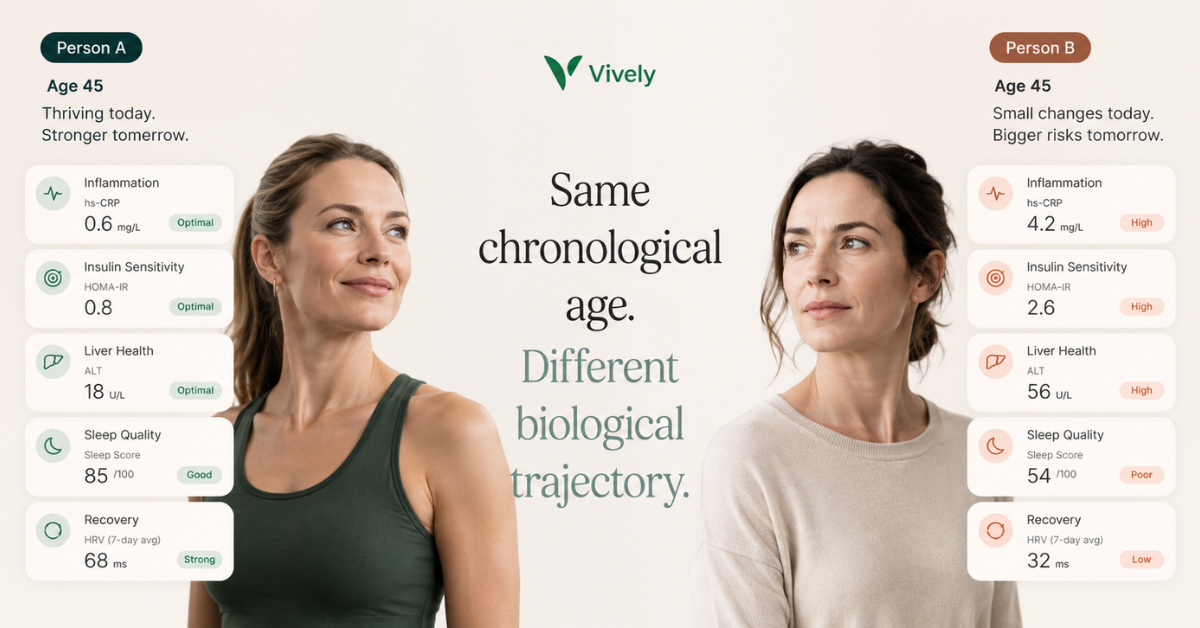
Two people can both be 45 years old. One may have flexible metabolic health, low inflammation, good sleep, healthy liver markers and strong fitness. Another may have high fasting insulin, rising liver enzymes, poor sleep, low activity, high inflammation and low recovery.

They are the same age on paper. Their bodies may not be ageing the same way.

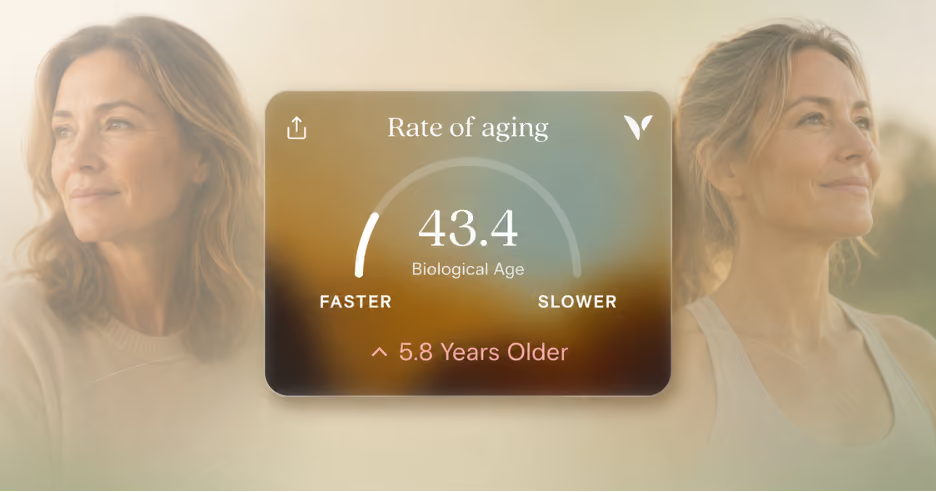
Biological age is not a diagnosis. It is a tracking signal. Used properly, it can help you understand whether your health trajectory is moving in the right direction.

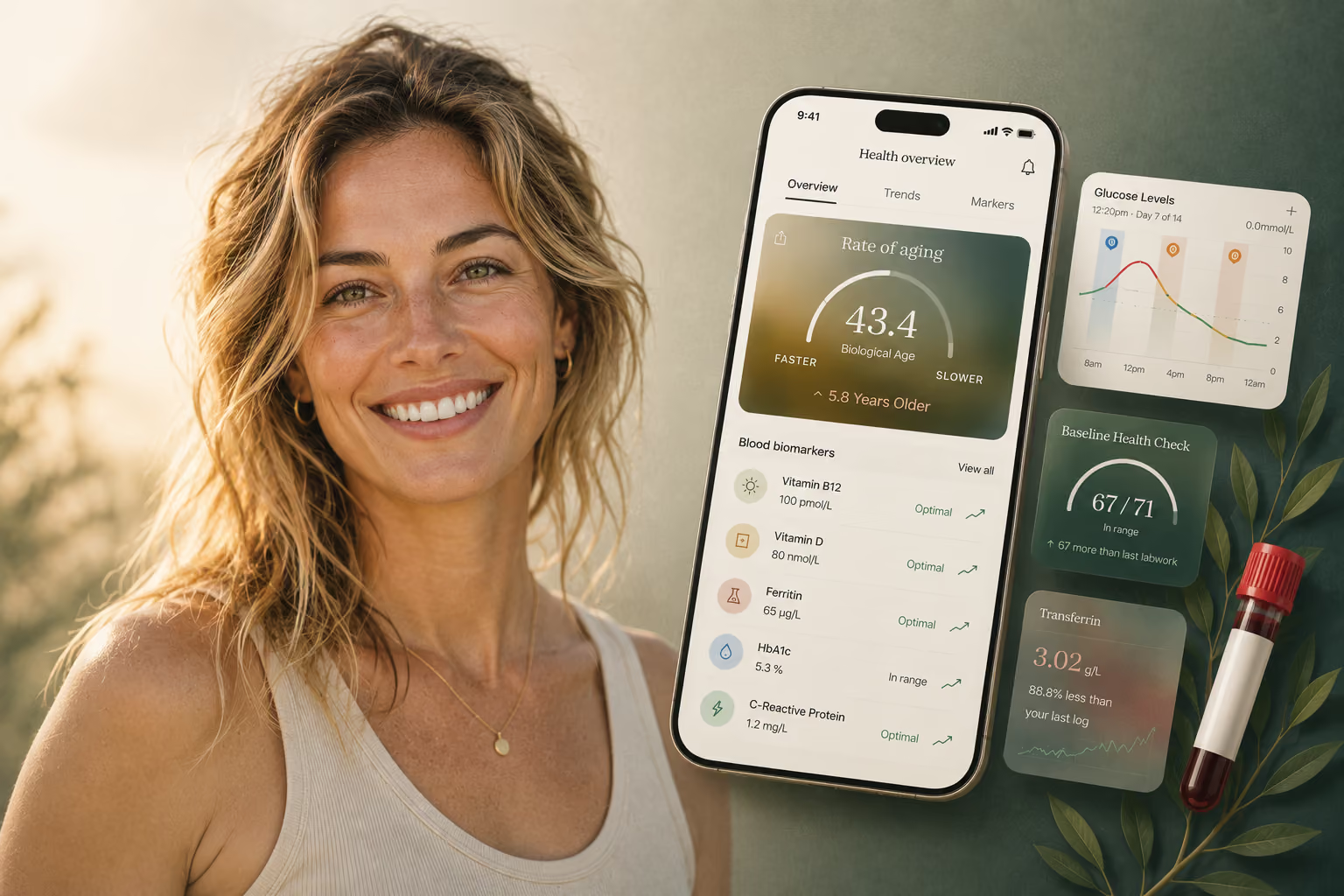
Vively’s Baseline Health Check⁠ includes biological age alongside 70+ key biomarkers across 10 health areas. Your results are interpreted with optimal ranges, not just standard reference ranges, and turned into a personalised plan with support and accountabitliy from your Vively health team.

Biological age vs chronological age

Chronological age tells you how long you have lived.

Biological age tries to estimate how your body is ageing internally.

The important point is not the number by itself.

The useful part is what sits underneath it.

Biological age is most valuable when it helps you understand which markers are driving the result and what you can improve.

Biological age is not one thing

There are different ways to estimate biological age.

Some biological age tests use blood markers. Some use DNA methylation, often called epigenetic clocks. Some use imaging, fitness data, wearable data or multi-omics models.

Each method measures a different aspect of ageing.

Vively uses a blood biomarker approach because it is practical, repeatable and tied to markers that people can often improve through nutrition, lifestyle, sleep, exercise, stress reduction, supplements and medical follow-up where needed.

How Vively calculates biological age

Vively uses the Levine PhenoAge method.

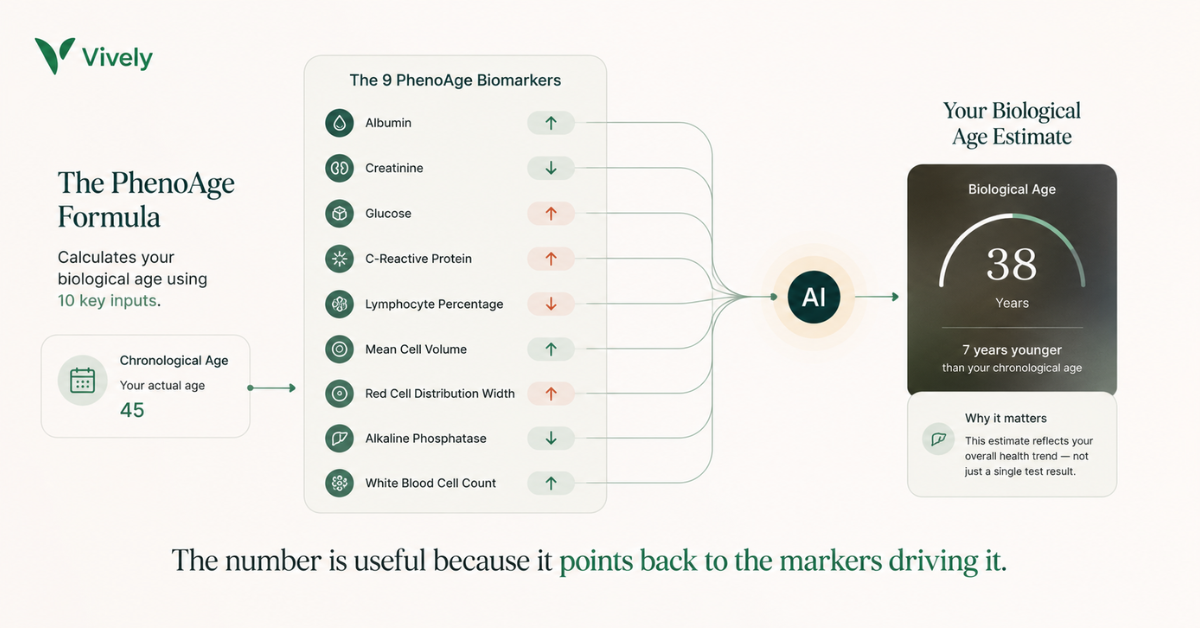
PhenoAge is a blood biomarker-based model designed to estimate biological ageing using routine clinical markers and chronological age. The original Levine PhenoAge model uses chronological age plus nine biomarkers: albumin, alkaline phosphatase, creatinine, C-reactive protein, fasting glucose, white blood cell count, lymphocyte percentage, mean cell volume and red cell distribution width.  

These markers relate to broad body systems:

What biological age can tell you

Biological age can help summarise broad patterns across your health.

It may help you understand:

  • whether your blood markers suggest healthier or less healthy ageing patterns
  • whether inflammation is affecting your trajectory
  • whether glucose and insulin patterns need attention
  • whether liver or kidney markers are contributing
  • whether blood health markers are worth improving
  • whether your plan is moving markers in the right direction over time

PhenoAge was developed to estimate mortality risk using routine clinical chemistry markers, then express that risk as an expected age within the population. The original research described Phenotypic Age as a measure based on clinical biomarkers that predicts mortality risk.  

That does not mean your biological age predicts exactly how long you will live.

It means the markers used in the model are connected to broader health and ageing risk.

The useful question is not, “What is my exact biological age?”

The useful question is, “What is driving the result, and can I improve the underlying markers?”

What biological age cannot tell you

Biological age is useful, but it has limits.

It cannot diagnose disease. It cannot tell you exactly how long you will live. It cannot replace a GP, specialist, medical history or clinical review.

It also does not capture every part of ageing.

A biological age result should always be interpreted with the underlying markers, your symptoms, your health history and your goals.

Why biological age matters for prevention

Most people think about ageing too late.

They wait until symptoms appear or a diagnosis arrives. But many ageing-related patterns build quietly over time.

These patterns can include:

  • rising fasting glucose or fasting insulin
  • increasing inflammation
  • declining kidney function
  • worsening liver markers
  • poorer blood health
  • higher cholesterol or triglycerides
  • worsening sleep and recovery
  • loss of muscle
  • lower fitness
  • increasing waist circumference

Biological age gives you a way to look at the broader picture.

It is not about fear. It is about feedback.

Biological age and healthspan

Australians on average spend their last 12-15 years of life, living with a disability or chronic disease. 

Lifespan is how long you live.

Healthspan is how long you live in good health.

Biological age is most useful when it helps improve healthspan. That means better energy, better metabolic health, better physical function, better cognition, better recovery and lower long-term risk.

The goal is not just to add years at the end of life.

The goal is to increase the number of years you feel strong, clear, confident, resilient and capable

Vively uses biological age as one part of the bigger picture. It sits alongside your blood markers, daily habits, wearable data, symptoms and personalised plan.

What can increase biological age?

Biological age can be influenced by many factors.

Some are harder to change, like genetics and early life history. Others are modifiable.

Common drivers of a higher biological age pattern may include:

  • poor glucose regulation
  • high fasting insulin
  • chronic inflammation
  • poor sleep
  • high stress
  • low physical activity
  • low muscle mass
  • poor diet quality
  • excess alcohol
  • smoking
  • poor liver health
  • kidney function changes
  • nutrient deficiencies
  • chronic disease
  • visceral fat
  • poor cardiovascular fitness

These factors often overlap. For example, poor sleep can worsen glucose regulation and cravings. High stress can affect sleep, recovery and appetite. Low muscle mass can worsen insulin sensitivity. Excess alcohol can affect liver markers, sleep and inflammation.

This is why prevention needs a systems view.

What can lower biological age?

The better question is: what can improve the underlying markers?

A lower biological age usually comes from improving the systems that drive the result.

The most effective plan depends on the person.

Someone with high fasting insulin and rising liver enzymes needs a different plan to someone with low ferritin and poor sleep. Someone with good blood markers but poor fitness may need a different plan again.

That is why Vively focuses on personalised plans and accountability not generic longevity advice.

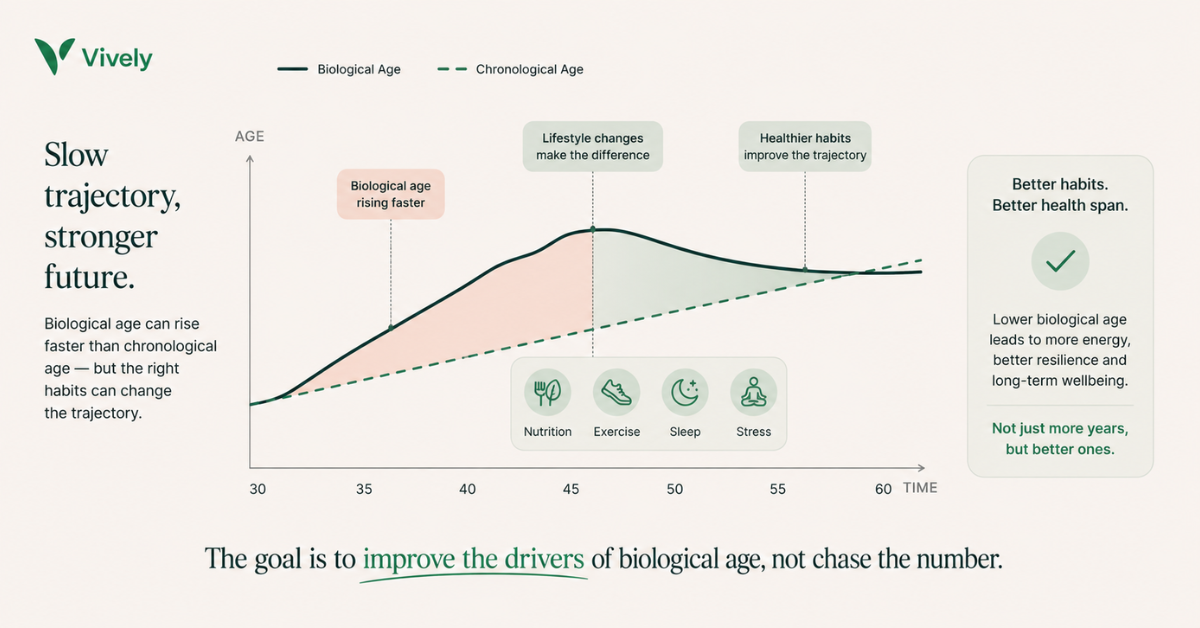
Biological age should be tracked over time

One biological age result can be interesting.

The trend is more useful.

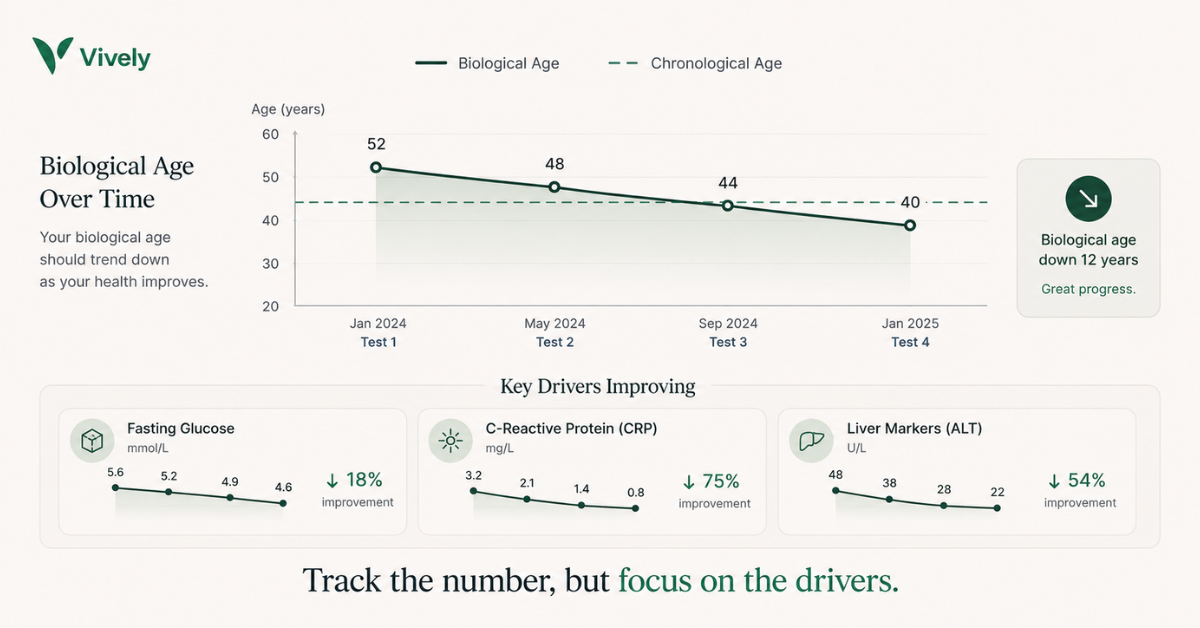
A single result shows where your markers sit today. Repeated testing shows whether your trajectory is improving.

Biological age should not be judged from one number alone. It should be reviewed with the underlying markers.

For example:

How Vively uses biological age

Vively uses biological age as part of a broader preventative health system.

With Vively’s Baseline Health Check⁠, your biological age sits alongside 70+ biomarkers across 10 key health areas. This helps your health team understand whether your markers are pointing towards better health, higher risk or areas that need support.

Vively then connects your results with:

  • optimal ranges
  • symptoms
  • Goals and values
  • meals
  • workouts
  • sleep
  • stress
  • wearable data
  • dietitian support and accountability
  • personalised plans
  • retesting over time

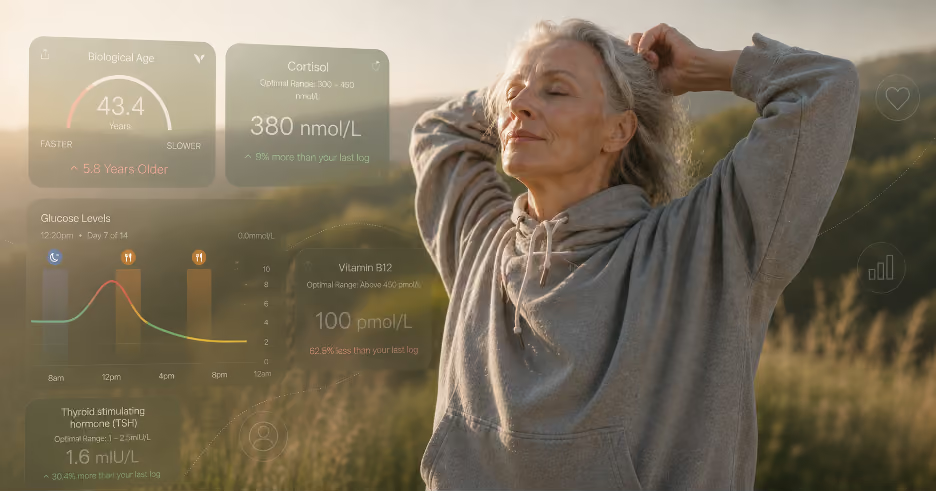
Your plan may include nutrition, lifestyle, supplements and further tests where appropriate. You can also add specialty tests⁠ when deeper insight is needed, including hormone, nutrient, stress and CGM programs.

The point is not just to tell you your biological age.

The point is to help you improve the drivers behind it.

Biological age by goal

Different people use biological age for different reasons.

If your goal is longevity

Biological age can help track broad ageing-related patterns across inflammation, glucose regulation, liver health, kidney function and blood health.

Useful areas to review include:

  • biological age
  • fasting glucose
  • fasting insulin
  • HbA1c
  • CRP
  • lipids
  • liver markers
  • kidney markers
  • full blood count
  • vitamin D
  • B12 and folate
  • sleep and recovery trends
  • fitness and activity

Relevant Vively links:

If your goal is better metabolic health

Biological age can be affected by glucose regulation, inflammation, liver health and other metabolic markers.

Useful areas to review include:

If your goal is energy and vitality

Biological age can point to broader health strain, but energy needs its own review.

Useful areas to check include:

If your goal is better recovery

Biological age should be interpreted alongside sleep, stress, exercise and inflammation.

Useful areas to review include:

  • CRP
  • fasting glucose
  • liver markers
  • HRV
  • resting heart rate
  • sleep duration
  • training load
  • protein intake
  • iron and B12 status

Biological age is not about perfection

Biological age can be motivating, but it should not become another score to obsess over.

The number is only useful if it helps you take better action.

A higher biological age does not mean you have failed. A lower biological age does not mean you can ignore your health. The goal is to use the result as feedback.

Ask:

  • Which markers are driving the result?
  • Are they modifiable?
  • Are they changing over time?
  • Do they match how I feel?
  • What is the highest leverage action?
  • What should I retest?

This is how biological age becomes useful.

When to seek medical advice

Biological age testing can help you understand broader health patterns, but it does not replace medical care.

Speak with a GP or qualified healthcare professional if you have:

  • very abnormal blood test results
  • chest pain
  • shortness of breath
  • fainting
  • unexplained weight loss
  • blood in your stool or urine
  • severe or worsening fatigue
  • persistent fever
  • new neurological symptoms
  • severe abdominal pain
  • known medical conditions that need monitoring
  • pregnancy-related concerns
  • symptoms that are worsening or persisting

Vively supports preventative health and health optimisation. It does not replace your GP, emergency care or specialist medical advice.

The simplest way to understand biological age

Chronological age tells you how many years you have lived.

Biological age gives you a signal about how your body is ageing internally.

The number matters less than the drivers.

If your biological age is higher than expected, the question is not “how do I hack the score?” The question is “which markers are pulling my health trajectory in the wrong direction?”

If your biological age is improving, the question is “what is working, and how do I keep going?”

That is the Vively approach.

Measure the baseline. Understand the drivers. Build the plan. Stay Accountable. Track the trajectory.

FAQs

What is biological age?

Biological age is an estimate of how your body is ageing internally compared with your chronological age. It can be based on blood markers, DNA methylation, fitness data or other biological signals.

How is biological age different from chronological age?

Chronological age is your age in years. Biological age estimates how your body is functioning internally. Two people can be the same chronological age but have different biological ages depending on their markers, lifestyle and health trajectory.

How does Vively calculate biological age?

Vively uses the Levine PhenoAge method, a blood biomarker-based model that uses chronological age plus markers linked to inflammation, glucose regulation, liver function, kidney function, immune patterns and blood health.

Is biological age accurate?

Biological age is an estimate, not a diagnosis. It is useful as a tracking signal when interpreted with the underlying markers, symptoms, health history and trends over time.

Can I lower my biological age?

You may be able to improve the markers that influence biological age through nutrition, exercise, sleep, stress management, reducing alcohol where relevant, improving metabolic health and addressing nutrient or inflammatory patterns. The right plan depends on your results.

What blood markers influence biological age?

The Levine PhenoAge model includes albumin, alkaline phosphatase, creatinine, C-reactive protein, fasting glucose, white blood cell count, lymphocyte percentage, mean cell volume, red cell distribution width and chronological age.

Does biological age predict how long I will live?

No, biological age test can’t predict exactly how long you will live. Some biological age models are associated with morbidity or mortality risk, but they should be used as risk and trajectory signals, not exact predictions.

Does Vively replace my GP?

No. Vively does not replace your GP. Vively supports preventative health, personalised insights and behaviour change. You should still see your GP for diagnosis, treatment, prescriptions, urgent symptoms and medical conditions.

Related Vively links

References

  1. Kwon D, et al. A toolkit for quantification of biological age from blood chemistry and organ function test data
  2. Liu Z, et al. A new aging measure captures morbidity and mortality risk from routine clinical biomarkers
  3. Levine ME, et al. An epigenetic biomarker of aging for lifespan and healthspan
  4. Lu AT, et al. DNA methylation GrimAge strongly predicts lifespan and healthspan
  5. Vively. Baseline Health Check
  6. Vively. Specialty Add-On Tests
  7. Vively. Test Library

Meet our team.

START YOUR BASELINE

Find out what's actually going on inside your body.

Most of what we write about here shows up in your blood work. A Vively Baseline Health Check covers 60+ biomarkers, reviewed 1:1 with a registered nurse. $99 to start your membership.

Get my baseline · $99

★★★★★ 4.8 rating 30,000+ members Accredited AU labs

Subscribe to our newsletter & join a community of 30,000+ Aussies

Get access to limited content drops, free invites to expert fireside chats, and exclusive offers.

What is biological age?
July 18, 2026

What is biological age?

Biological age is an estimate of how your body is ageing compared with your chronological age.

Your chronological age is simple. It is the number of years since you were born.

Your biological age is different. It looks at how your body is functioning internally. It can be influenced by inflammation, glucose regulation, liver health, kidney function, blood health, nutrients, lifestyle, stress, sleep, fitness and long-term health risk.

Two people can both be 45 years old. One may have flexible metabolic health, low inflammation, good sleep, healthy liver markers and strong fitness. Another may have high fasting insulin, rising liver enzymes, poor sleep, low activity, high inflammation and low recovery.

They are the same age on paper. Their bodies may not be ageing the same way.

Biological age is not a diagnosis. It is a tracking signal. Used properly, it can help you understand whether your health trajectory is moving in the right direction.

Vively’s Baseline Health Check⁠ includes biological age alongside 70+ key biomarkers across 10 health areas. Your results are interpreted with optimal ranges, not just standard reference ranges, and turned into a personalised plan with support and accountabitliy from your Vively health team.

Biological age vs chronological age

Chronological age tells you how long you have lived.

Biological age tries to estimate how your body is ageing internally.

The important point is not the number by itself.

The useful part is what sits underneath it.

Biological age is most valuable when it helps you understand which markers are driving the result and what you can improve.

Biological age is not one thing

There are different ways to estimate biological age.

Some biological age tests use blood markers. Some use DNA methylation, often called epigenetic clocks. Some use imaging, fitness data, wearable data or multi-omics models.

Each method measures a different aspect of ageing.

Vively uses a blood biomarker approach because it is practical, repeatable and tied to markers that people can often improve through nutrition, lifestyle, sleep, exercise, stress reduction, supplements and medical follow-up where needed.

How Vively calculates biological age

Vively uses the Levine PhenoAge method.

PhenoAge is a blood biomarker-based model designed to estimate biological ageing using routine clinical markers and chronological age. The original Levine PhenoAge model uses chronological age plus nine biomarkers: albumin, alkaline phosphatase, creatinine, C-reactive protein, fasting glucose, white blood cell count, lymphocyte percentage, mean cell volume and red cell distribution width.  

These markers relate to broad body systems:
What biological age can tell you

Biological age can help summarise broad patterns across your health.

It may help you understand:

  • whether your blood markers suggest healthier or less healthy ageing patterns
  • whether inflammation is affecting your trajectory
  • whether glucose and insulin patterns need attention
  • whether liver or kidney markers are contributing
  • whether blood health markers are worth improving
  • whether your plan is moving markers in the right direction over time

PhenoAge was developed to estimate mortality risk using routine clinical chemistry markers, then express that risk as an expected age within the population. The original research described Phenotypic Age as a measure based on clinical biomarkers that predicts mortality risk.  

That does not mean your biological age predicts exactly how long you will live.

It means the markers used in the model are connected to broader health and ageing risk.

The useful question is not, “What is my exact biological age?”

The useful question is, “What is driving the result, and can I improve the underlying markers?”

What biological age cannot tell you

Biological age is useful, but it has limits.

It cannot diagnose disease. It cannot tell you exactly how long you will live. It cannot replace a GP, specialist, medical history or clinical review.

It also does not capture every part of ageing.

A biological age result should always be interpreted with the underlying markers, your symptoms, your health history and your goals.

Why biological age matters for prevention

Most people think about ageing too late.

They wait until symptoms appear or a diagnosis arrives. But many ageing-related patterns build quietly over time.

These patterns can include:

  • rising fasting glucose or fasting insulin
  • increasing inflammation
  • declining kidney function
  • worsening liver markers
  • poorer blood health
  • higher cholesterol or triglycerides
  • worsening sleep and recovery
  • loss of muscle
  • lower fitness
  • increasing waist circumference

Biological age gives you a way to look at the broader picture.

It is not about fear. It is about feedback.
Biological age and healthspan

Australians on average spend their last 12-15 years of life, living with a disability or chronic disease. 

Lifespan is how long you live.

Healthspan is how long you live in good health.

Biological age is most useful when it helps improve healthspan. That means better energy, better metabolic health, better physical function, better cognition, better recovery and lower long-term risk.

The goal is not just to add years at the end of life.

The goal is to increase the number of years you feel strong, clear, confident, resilient and capable

Vively uses biological age as one part of the bigger picture. It sits alongside your blood markers, daily habits, wearable data, symptoms and personalised plan.

What can increase biological age?

Biological age can be influenced by many factors.

Some are harder to change, like genetics and early life history. Others are modifiable.

Common drivers of a higher biological age pattern may include:

  • poor glucose regulation
  • high fasting insulin
  • chronic inflammation
  • poor sleep
  • high stress
  • low physical activity
  • low muscle mass
  • poor diet quality
  • excess alcohol
  • smoking
  • poor liver health
  • kidney function changes
  • nutrient deficiencies
  • chronic disease
  • visceral fat
  • poor cardiovascular fitness

These factors often overlap. For example, poor sleep can worsen glucose regulation and cravings. High stress can affect sleep, recovery and appetite. Low muscle mass can worsen insulin sensitivity. Excess alcohol can affect liver markers, sleep and inflammation.

This is why prevention needs a systems view.

What can lower biological age?

The better question is: what can improve the underlying markers?

A lower biological age usually comes from improving the systems that drive the result.

The most effective plan depends on the person.

Someone with high fasting insulin and rising liver enzymes needs a different plan to someone with low ferritin and poor sleep. Someone with good blood markers but poor fitness may need a different plan again.

That is why Vively focuses on personalised plans and accountability not generic longevity advice.

Biological age should be tracked over time

One biological age result can be interesting.

The trend is more useful.

A single result shows where your markers sit today. Repeated testing shows whether your trajectory is improving.

Biological age should not be judged from one number alone. It should be reviewed with the underlying markers.

For example:

How Vively uses biological age

Vively uses biological age as part of a broader preventative health system.

With Vively’s Baseline Health Check⁠, your biological age sits alongside 70+ biomarkers across 10 key health areas. This helps your health team understand whether your markers are pointing towards better health, higher risk or areas that need support.

Vively then connects your results with:

  • optimal ranges
  • symptoms
  • Goals and values
  • meals
  • workouts
  • sleep
  • stress
  • wearable data
  • dietitian support and accountability
  • personalised plans
  • retesting over time

Your plan may include nutrition, lifestyle, supplements and further tests where appropriate. You can also add specialty tests⁠ when deeper insight is needed, including hormone, nutrient, stress and CGM programs.

The point is not just to tell you your biological age.

The point is to help you improve the drivers behind it.

Biological age by goal

Different people use biological age for different reasons.

If your goal is longevity

Biological age can help track broad ageing-related patterns across inflammation, glucose regulation, liver health, kidney function and blood health.

Useful areas to review include:

  • biological age
  • fasting glucose
  • fasting insulin
  • HbA1c
  • CRP
  • lipids
  • liver markers
  • kidney markers
  • full blood count
  • vitamin D
  • B12 and folate
  • sleep and recovery trends
  • fitness and activity

Relevant Vively links:

If your goal is better metabolic health

Biological age can be affected by glucose regulation, inflammation, liver health and other metabolic markers.

Useful areas to review include:

If your goal is energy and vitality

Biological age can point to broader health strain, but energy needs its own review.

Useful areas to check include:

If your goal is better recovery

Biological age should be interpreted alongside sleep, stress, exercise and inflammation.

Useful areas to review include:

  • CRP
  • fasting glucose
  • liver markers
  • HRV
  • resting heart rate
  • sleep duration
  • training load
  • protein intake
  • iron and B12 status

Biological age is not about perfection

Biological age can be motivating, but it should not become another score to obsess over.

The number is only useful if it helps you take better action.

A higher biological age does not mean you have failed. A lower biological age does not mean you can ignore your health. The goal is to use the result as feedback.

Ask:

  • Which markers are driving the result?
  • Are they modifiable?
  • Are they changing over time?
  • Do they match how I feel?
  • What is the highest leverage action?
  • What should I retest?

This is how biological age becomes useful.

When to seek medical advice

Biological age testing can help you understand broader health patterns, but it does not replace medical care.

Speak with a GP or qualified healthcare professional if you have:

  • very abnormal blood test results
  • chest pain
  • shortness of breath
  • fainting
  • unexplained weight loss
  • blood in your stool or urine
  • severe or worsening fatigue
  • persistent fever
  • new neurological symptoms
  • severe abdominal pain
  • known medical conditions that need monitoring
  • pregnancy-related concerns
  • symptoms that are worsening or persisting

Vively supports preventative health and health optimisation. It does not replace your GP, emergency care or specialist medical advice.

The simplest way to understand biological age

Chronological age tells you how many years you have lived.

Biological age gives you a signal about how your body is ageing internally.

The number matters less than the drivers.

If your biological age is higher than expected, the question is not “how do I hack the score?” The question is “which markers are pulling my health trajectory in the wrong direction?”

If your biological age is improving, the question is “what is working, and how do I keep going?”

That is the Vively approach.

Measure the baseline. Understand the drivers. Build the plan. Stay Accountable. Track the trajectory.

FAQs

What is biological age?

Biological age is an estimate of how your body is ageing internally compared with your chronological age. It can be based on blood markers, DNA methylation, fitness data or other biological signals.

How is biological age different from chronological age?

Chronological age is your age in years. Biological age estimates how your body is functioning internally. Two people can be the same chronological age but have different biological ages depending on their markers, lifestyle and health trajectory.

How does Vively calculate biological age?

Vively uses the Levine PhenoAge method, a blood biomarker-based model that uses chronological age plus markers linked to inflammation, glucose regulation, liver function, kidney function, immune patterns and blood health.

Is biological age accurate?

Biological age is an estimate, not a diagnosis. It is useful as a tracking signal when interpreted with the underlying markers, symptoms, health history and trends over time.

Can I lower my biological age?

You may be able to improve the markers that influence biological age through nutrition, exercise, sleep, stress management, reducing alcohol where relevant, improving metabolic health and addressing nutrient or inflammatory patterns. The right plan depends on your results.

What blood markers influence biological age?

The Levine PhenoAge model includes albumin, alkaline phosphatase, creatinine, C-reactive protein, fasting glucose, white blood cell count, lymphocyte percentage, mean cell volume, red cell distribution width and chronological age.

Does biological age predict how long I will live?

No, biological age test can’t predict exactly how long you will live. Some biological age models are associated with morbidity or mortality risk, but they should be used as risk and trajectory signals, not exact predictions.

Does Vively replace my GP?

No. Vively does not replace your GP. Vively supports preventative health, personalised insights and behaviour change. You should still see your GP for diagnosis, treatment, prescriptions, urgent symptoms and medical conditions.

Related Vively links

References

  1. Kwon D, et al. A toolkit for quantification of biological age from blood chemistry and organ function test data
  2. Liu Z, et al. A new aging measure captures morbidity and mortality risk from routine clinical biomarkers
  3. Levine ME, et al. An epigenetic biomarker of aging for lifespan and healthspan
  4. Lu AT, et al. DNA methylation GrimAge strongly predicts lifespan and healthspan
  5. Vively. Baseline Health Check
  6. Vively. Specialty Add-On Tests
  7. Vively. Test Library

Get irrefutable data about your diet and lifestyle by using your own glucose data with Vively’s CGM Program. We’re currently offering a 20% discount for our annual plan. Sign up here.

Tim Veron

Co-Founder & CEO

Vively is reimagining how healthcare is delivered with the world's first online holistic healthcare clinic.

Join Vively's CGM Program

Achieve your health goals using your glucose data

JOIN NOW

Read this next