
Home / Blog /

What blood tests should I get?

What blood tests should I get?
Start here

What blood tests should I get?

July 20, 2026

Unlock Weight Loss With a Comprehensive Blood Test & Personalised Treatment Plan

Only 50 spots left in September - reserve your spot now for free.

  • Discover why your body is holding onto weight
  • Get a doctor-led plan tailored to your biology, including medication if suitable
  • 1:1 coaching to build habits that drive long-term sustainable weight loss
On this page

What blood tests should I get?

Most blood tests are ordered after something feels wrong.

You feel tired. You gain weight. Your sleep changes. Your cholesterol rises. Your doctor orders a test to see whether there is a clear abnormality. If the result sits inside the lab reference range, you may be told everything is normal.

That can be useful. It can also be incomplete.

Many people are not only trying to answer, “Do I have a disease?” They are trying to understand why they feel flat, why their energy is inconsistent, why their weight is changing, why their hormones feel different, why their digestion is off, or whether they are doing all they can to age well.

A useful blood test should do more than look for disease. It should help you understand your current health, what is changing over time, and which markers are worth improving before they become a bigger problem.

Health is not binary. You are not simply healthy or sick. Health sits on a continuum. Your metabolism, inflammation, liver health, immune system, nutrient status, hormones, sleep, stress and cardiovascular risk can shift for years before disease appears.

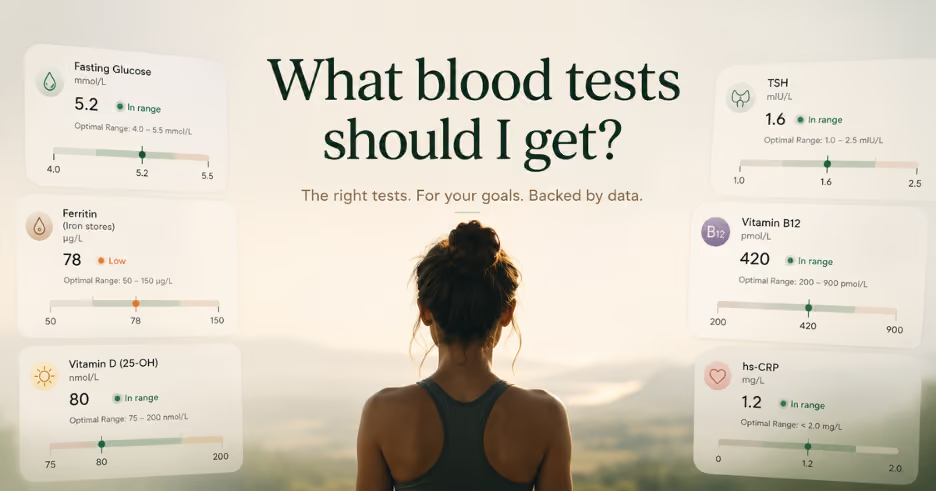
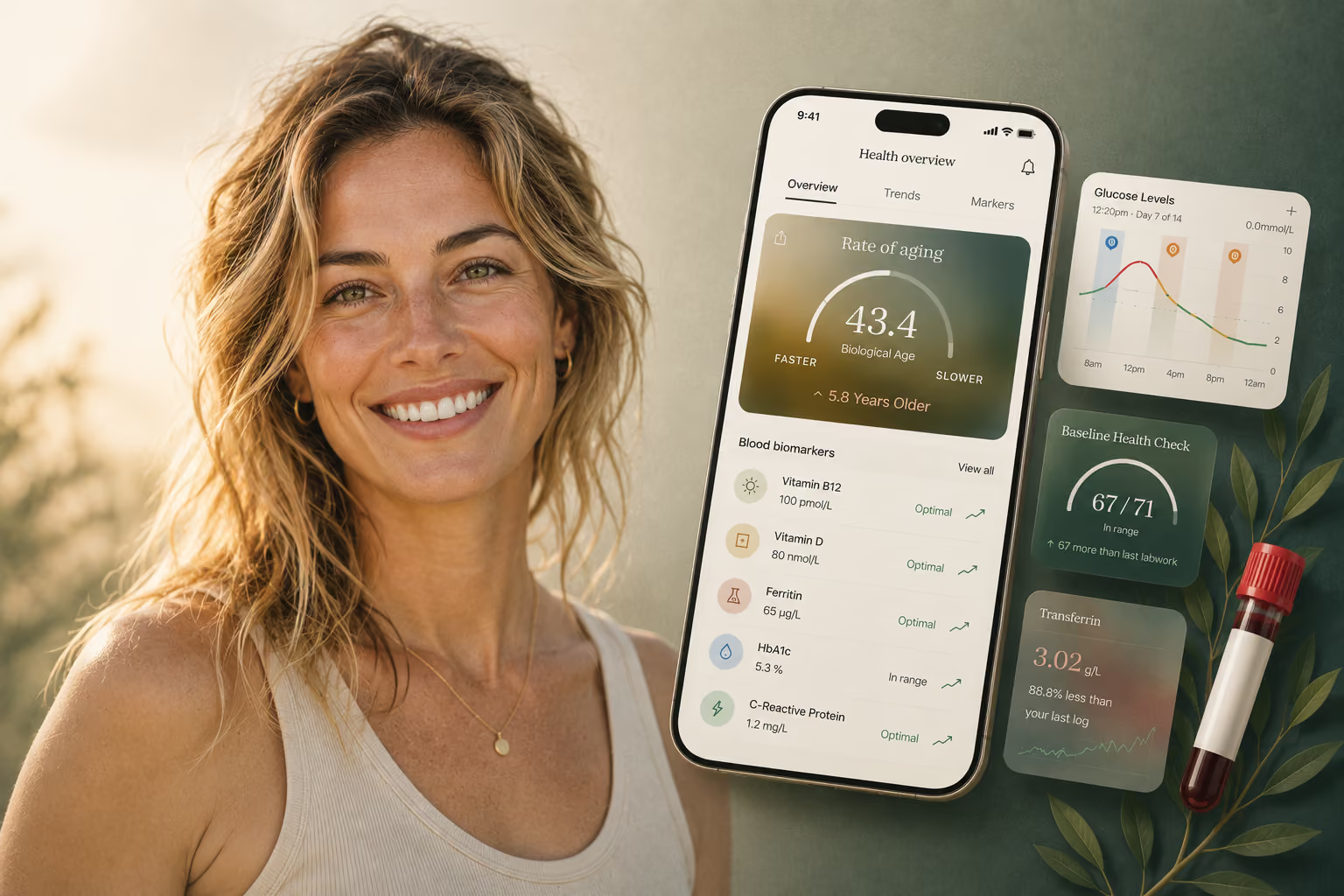
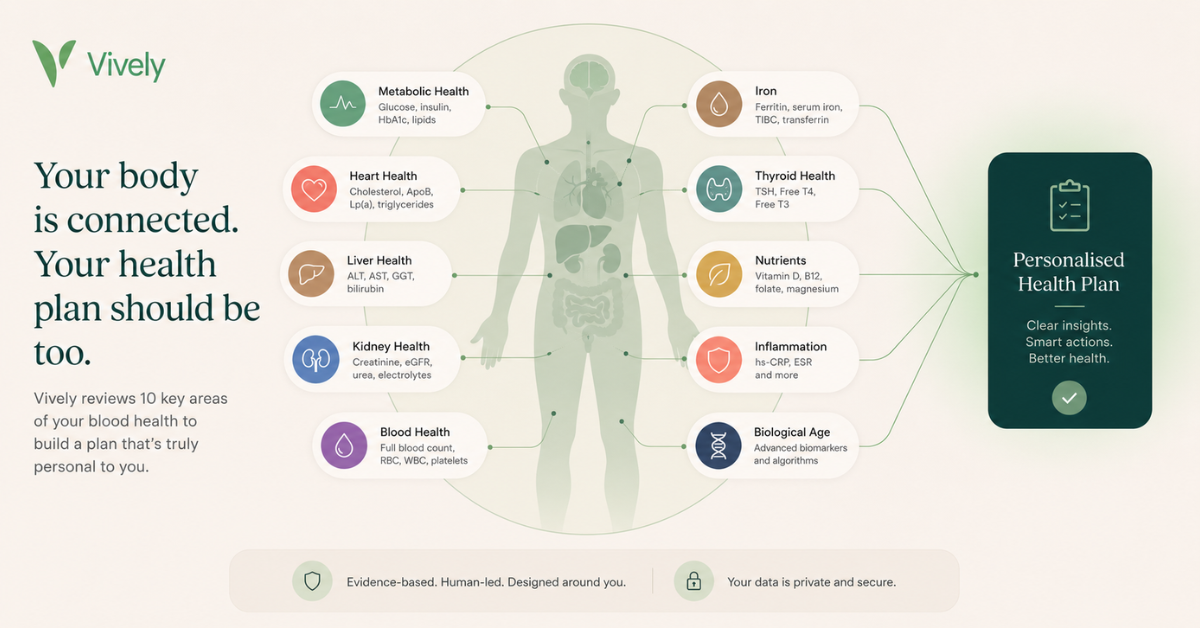
Vively’s Baseline Health Check⁠ is built around this reality. It checks 70+ key biomarkers across 10 key health areas, including metabolic health, inflammation, heart health, liver health, kidney health, blood health, thyroid, nutrients, and biological age. Your results are reviewed using optimal ranges, not just standard reference ranges, and turned into a personalised plan with support from your Vively health team.
The problem with standard blood testing

Standard blood testing is often reactive. It usually starts after symptoms appear, after risk has increased, or after a medical condition needs investigation.

That is important. Diagnostic testing matters. GP care matters. Medical review matters.

Chronic lifestyle disease is different. The problem is that many people sit in the gap between “not sick enough to diagnose” and “not feeling healthy”.

That gap is where preventative testing matters most.

The RACGP Red Book supports evidence-based screening, case finding and preventive activities in primary care, including prevention, early detection and health education. It also states that screening activities should be recommended where evidence shows benefits outweigh harms. The point is not to test randomly. The point is to test in a way that improves decisions.  

Why “normal” does not always mean healthy

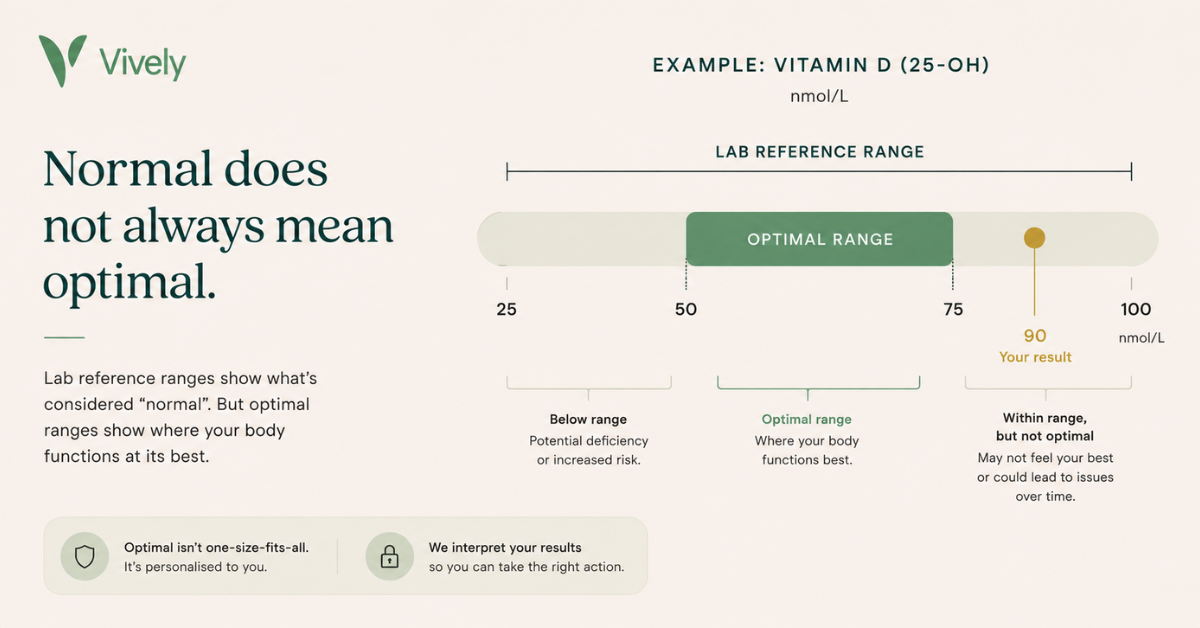
A lab reference range is useful. It helps identify results that may be unusually high or low.

But a reference range is not the same as optimal health.

Reference intervals are commonly based on the spread of values from a reference population, often using the central 95% of results. This means a result can be considered “normal” because it is common in that group, not because it is ideal for your age, symptoms, goals, risk factors or long-term health.  

That distinction matters because population health is not the same as optimal health. In Australia, the ABS reported that 81.4% of people had at least one long-term health condition in the 2022 National Health Survey, and 49.9% had at least one chronic condition.  

A result can be inside range and still be worth improving.

Optimal ranges are not diagnostic thresholds. They help identify what may be worth improving early, what should be monitored and what needs medical review.
The best blood tests to get for a preventative health check

A useful preventative blood test should cover the major systems that affect how you feel, function and age.

Full blood count

A full blood count gives a broad view of your blood cells and immune patterns.

It commonly includes markers such as:

A full blood count can help identify patterns linked to anaemia, infection, inflammation, immune activity, clotting, nutrient issues and oxygen transport.

It is especially useful for fatigue, low energy, exercise performance, frequent illness and general health screening.

A full blood count should not be interpreted on its own. Low haemoglobin, high MCV or abnormal white cells need context from iron studies, B12, folate, inflammation, symptoms and medical history.

Iron studies

Iron studies help assess iron storage, transport and availability.

Useful markers include:

Ferritin is one of the most important iron markers because it reflects stored iron. It can be highly relevant for fatigue, low energy, exercise performance, restless legs, hair shedding, mood and recovery.

Ferritin should not be reviewed alone. It can rise with inflammation, infection, liver stress, metabolic dysfunction or possible iron overload. That is why it should be interpreted alongside CRP, transferrin saturation, full blood count and liver enzymes.

Relevant Vively links:

Metabolic health markers

Metabolic health is one of the most important areas to check.

It affects energy, hunger, cravings, weight, liver health, cardiovascular risk and long-term health.

Useful markers include:

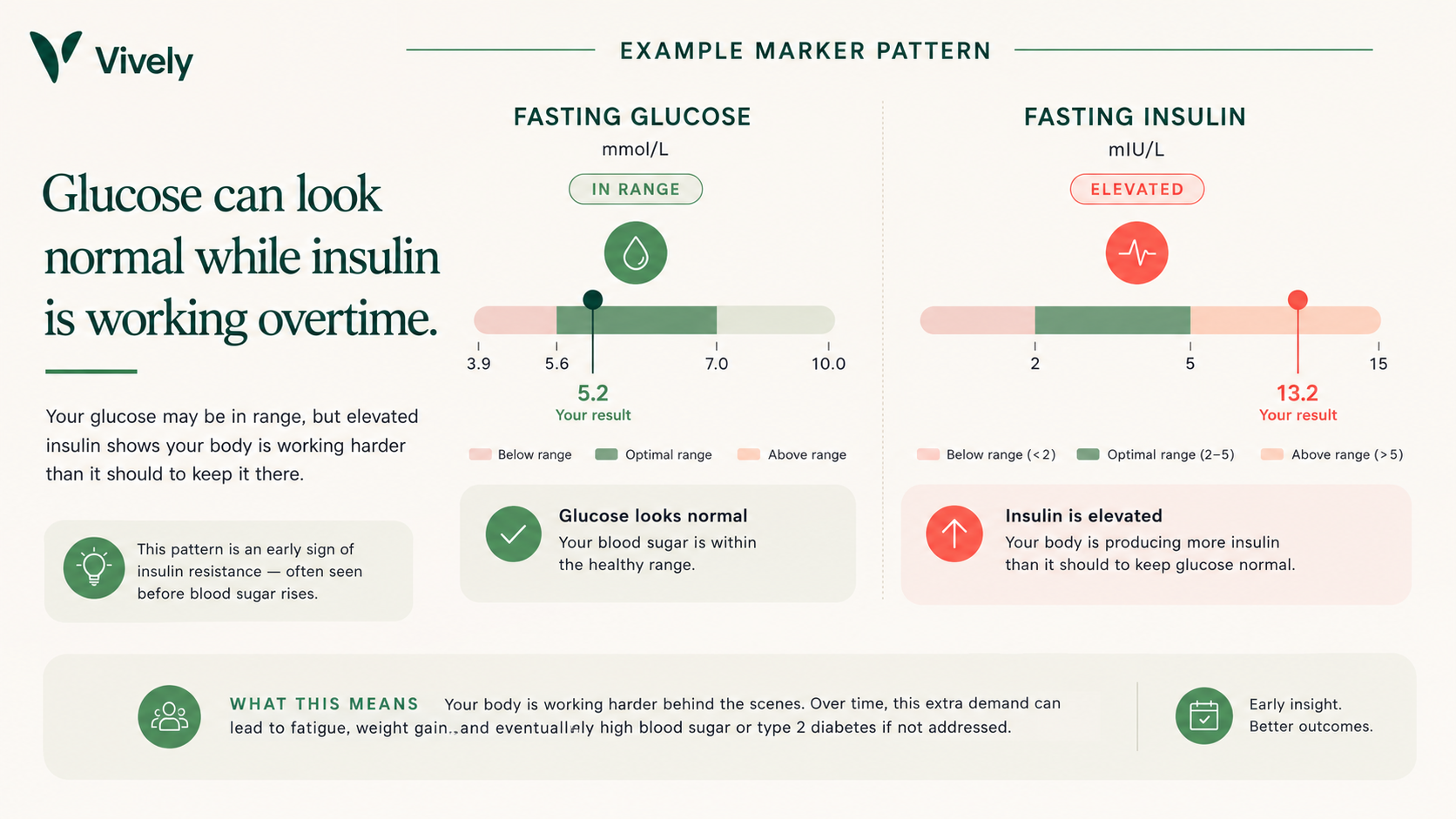
Fasting glucose and HbA1c are useful, but they can miss early insulin resistance. Fasting insulin can show metabolic strain earlier because insulin may rise to keep glucose controlled.

That is why someone can be told their glucose is fine while still gaining weight, feeling tired after meals or struggling with cravings.

Relevant Vively links:
Cholesterol and heart health markers

A standard lipid panel is useful, but it is not always the full picture.

Useful markers include:

Cholesterol should not be reviewed in isolation. The pattern matters.

High triglycerides, low HDL, elevated fasting insulin and raised liver enzymes can point to a metabolic pattern. LDL cholesterol may be more meaningful when interpreted with ApoB, non-HDL cholesterol, family history, blood pressure, smoking status, inflammation and overall risk. Learning about your Omega 3 fatty acids, may also be a worthwhile addition.

Liver function markers

Liver markers can reveal patterns linked to fatty liver, alcohol, medication, supplements, metabolic dysfunction and inflammation.

Useful markers include:

Mild liver enzyme changes are common. They should not be ignored, especially if they are trending upwards over time.

ALT, AST and GGT are often worth reviewing alongside waist circumference, triglycerides, fasting insulin, HbA1c, alcohol intake, medication, supplements and sleep.

The point is not to panic over one result. The point is to understand the pattern and, more importantly, lifestyle changes that can make a difference

Kidney function and electrolytes

Kidney markers help assess filtration, fluid balance and metabolic health.

Useful markers include:

Kidney markers are especially important for people with high blood pressure, diabetes risk, cardiovascular risk, high protein intake, medication use or known kidney concerns.

eGFR should be interpreted with age, muscle mass, hydration, medication and medical history.

Inflammation markers

Inflammation markers are useful, but they are not specific.

Useful markers include:

  • hs-CRP
  • CRP
  • ESR, where appropriate
  • white blood cell pattern
  • ferritin, in context

A high CRP does not tell you the cause. It may relate to infection, injury, autoimmune activity, dental issues, poor sleep, excess body fat, metabolic dysfunction or other inflammatory states.

When inflammation is persistently elevated, it is worth understanding why.

Relevant Vively link:

Thyroid markers

Thyroid function can affect energy, weight, mood, temperature, hair, digestion, fertility and cognition regularity, cholesterol and recovery.

Useful markers may include:

  • TSH
  • free T4
  • free T3, where appropriate
  • thyroid antibodies, where clinically relevant

TSH is a useful starting point. It is not always the full thyroid picture.

Thyroid markers should be interpreted with symptoms, age, pregnancy status, medications, iodine status, iron, stress, sleep and broader metabolic health.

Relevant Vively link:

  • TSH Test⁠

Nutrient markers

Nutrient status can affect energy, mood, immunity, bone health, exercise recovery, inflammation, metabolism, gut health, cognition and long-term health.

Useful markers include:

  • vitamin D
  • vitamin B12
  • folate
  • ferritin and iron studies
  • magnesium, where available
  • zinc, where clinically relevant

Nutrient results should be interpreted with diet, symptoms, supplement use, gut health, medications and absorption issues.

Relevant Vively links:

  • Vitamin D Test⁠
  • Vitamin B12 Test⁠
  • Ferritin Test⁠

Hormone markers

Hormone testing should be targeted.

The right markers depend on sex, age, symptoms, cycle timing, life stage, contraception, medications, stress, sleep, body composition and the clinical question.

Cycle timing matters for women.

Testosterone should not be interpreted without sleep, stress, alcohol intake, training load, body composition, medications, liver health and insulin resistance. Because levels fluctuate, testing on more than one day is also recommended.

Relevant Vively links:

Biological age markers

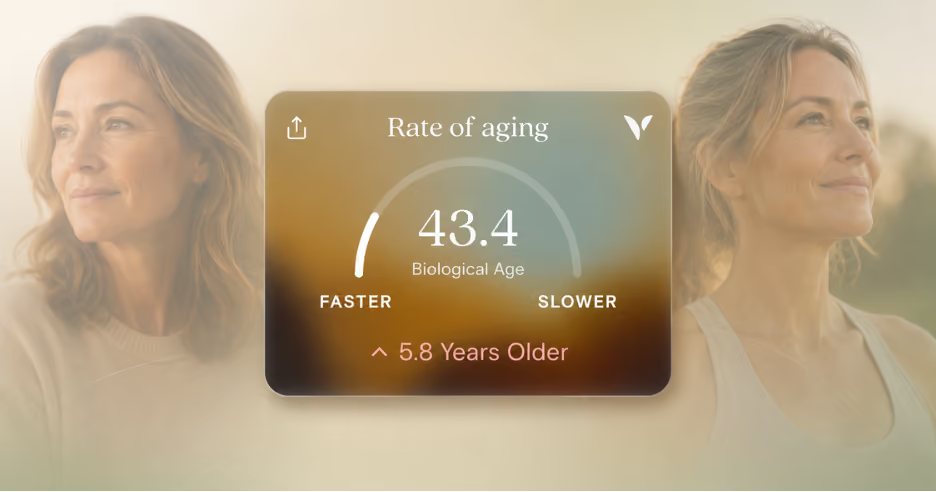
Biological age can help summarise broader patterns linked to ageing and long-term health.

It is not a diagnosis. It is a tracking signal.

Vively includes biological age in the Baseline Health Check⁠. The value is not just the age number. The value is understanding the underlying markers that influence it.

These often include markers linked to:

The goal is not to chase a perfect biological age. The endgame is preventing or stalling chronic disease

Relevant Vively link:

What blood tests should I get for my goal?

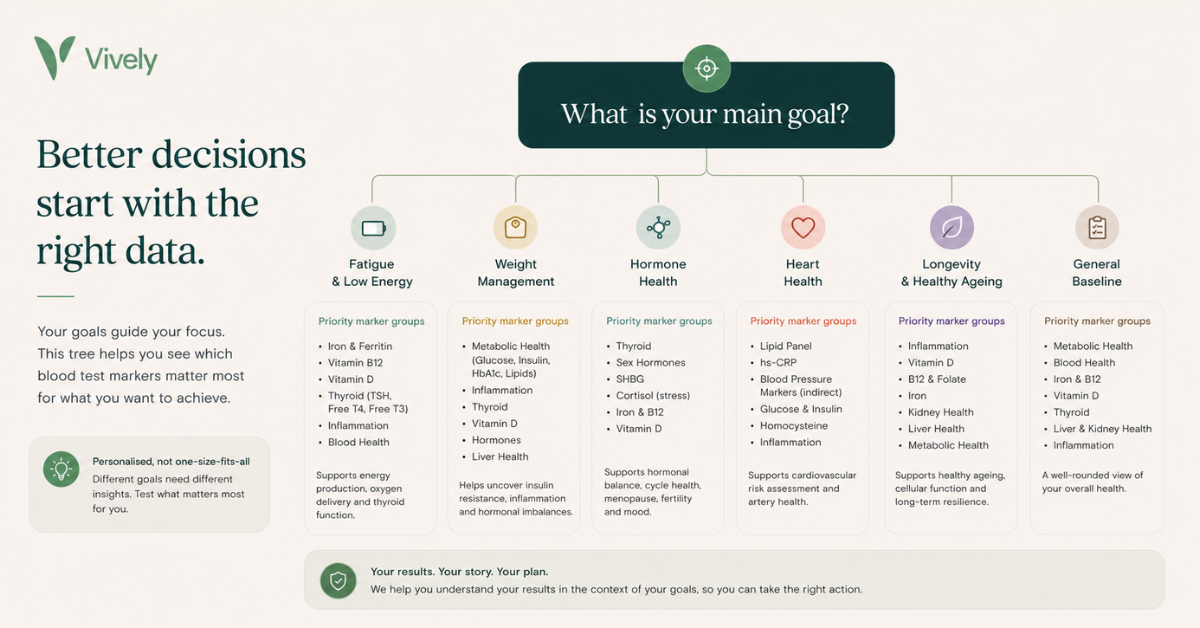
The right blood tests depend on what you are trying to understand.

If you are tired all the time

Consider checking:

  • full blood count
  • ferritin and iron studies
  • B12
  • folate
  • vitamin D
  • TSH
  • free T4, where appropriate
  • CRP or hs-CRP
  • liver function
  • kidney function
  • fasting glucose
  • fasting insulin
  • HbA1c

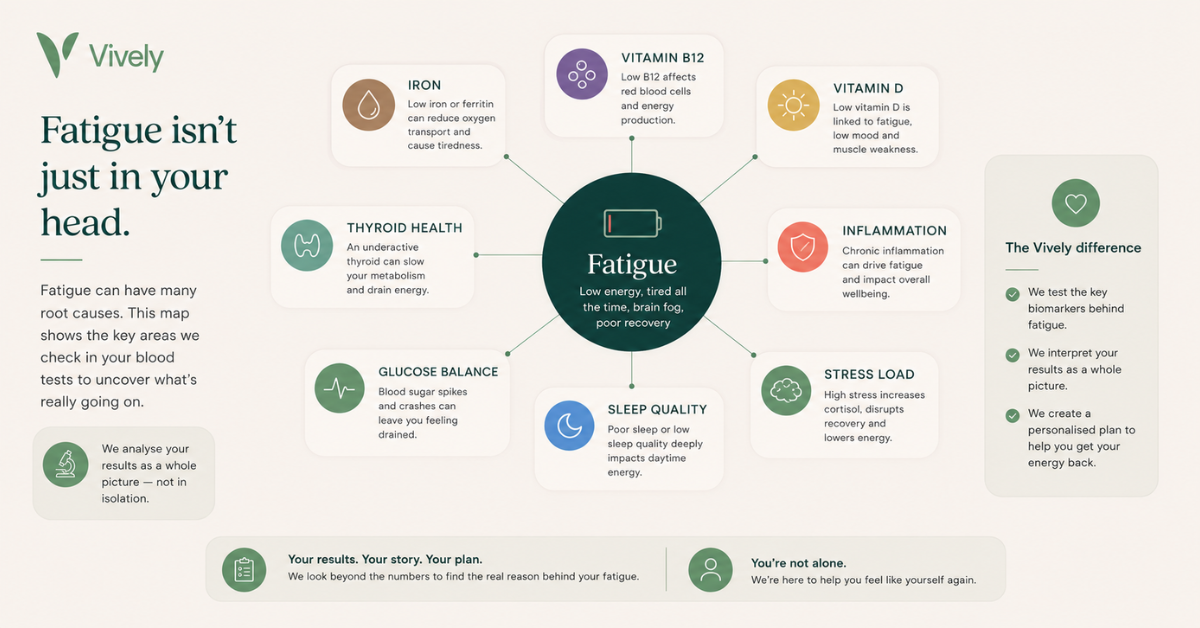
Fatigue is rarely explained by one marker. Low iron, low B12, low vitamin D, thyroid patterns, inflammation, poor sleep, blood sugar instability and liver stress can all contribute.

Relevant Vively links:
This list is a guide only and isn't exhaustive. Some results may need further interpretation or assessment with your GP.

If you are gaining weight or struggling to lose weight

Consider checking:

  • fasting insulin
  • fasting glucose
  • HbA1c
  • HOMA-IR
  • triglycerides
  • HDL cholesterol
  • ALT
  • GGT
  • TSH
  • vitamin D
  • CRP

Weight is not just about calories. Insulin resistance, sleep, stress, hormones, liver health, gut health, appetite, training load and body composition can all influence the pattern.

Relevant Vively links:

If you want to understand insulin resistance

Consider checking:

  • fasting insulin
  • fasting glucose
  • HbA1c
  • HOMA-IR
  • triglycerides
  • HDL cholesterol
  • ALT
  • GGT
  • CRP

Waist circumference and blood pressure are also useful, even though they are not blood tests.

CGM can add more context by showing how your glucose responds to meals, sleep, stress and exercise.

Relevant Vively links:

If you are worried about cholesterol or heart health

Consider checking:

  • total cholesterol
  • LDL cholesterol
  • HDL cholesterol
  • triglycerides
  • non-HDL cholesterol
  • ApoB, where available
  • lipoprotein(a), where appropriate
  • CRP or hs-CRP
  • HbA1c
  • fasting insulin
  • liver function
  • kidney function

Cholesterol should be interpreted with the broader risk picture, including blood pressure, smoking, family history, diabetes risk, inflammation, metabolic health and body composition. CGM data can add to this, as high glucose variability, particularly frequent lows, is linked with increased cardiovascular risk.

If you want a longevity or preventative health baseline

Consider checking:

  • full blood count
  • iron studies
  • fasting glucose
  • fasting insulin
  • HbA1c
  • lipids
  • ApoB, where available
  • liver function
  • kidney function
  • inflammation
  • thyroid
  • vitamin D
  • B12
  • folate
  • biological age

This is where a broad baseline makes sense.

Start with:

If you are a woman in your 30s, 40s or 50s

Consider checking:

  • full blood count
  • iron studies
  • ferritin
  • vitamin D
  • B12
  • folate
  • TSH
  • free T4, where appropriate
  • fasting insulin
  • HbA1c
  • lipids
  • liver function
  • inflammation
  • hormones where symptoms or life stage justify it

Perimenopause is not diagnosed by one blood test. Symptoms, cycle changes, age and context matter heavily.

Blood tests can still be useful because they help identify other contributors to fatigue, mood changes, weight gain, low libido, poor sleep and cycle changes.

Relevant Vively links:

If you are a man in your 30s, 40s or 50s

Consider checking:

  • full blood count
  • ferritin and iron studies
  • fasting insulin
  • HbA1c
  • lipids
  • liver function
  • kidney function
  • CRP
  • vitamin D
  • B12
  • TSH
  • testosterone markers where symptoms justify it

Men often undercheck metabolic health, liver markers and cardiovascular risk until problems are already visible.

A preventative baseline can help show where risk may be building earlier.

Relevant Vively links:

Which blood tests should you prioritise?

Why trends matter more than one result

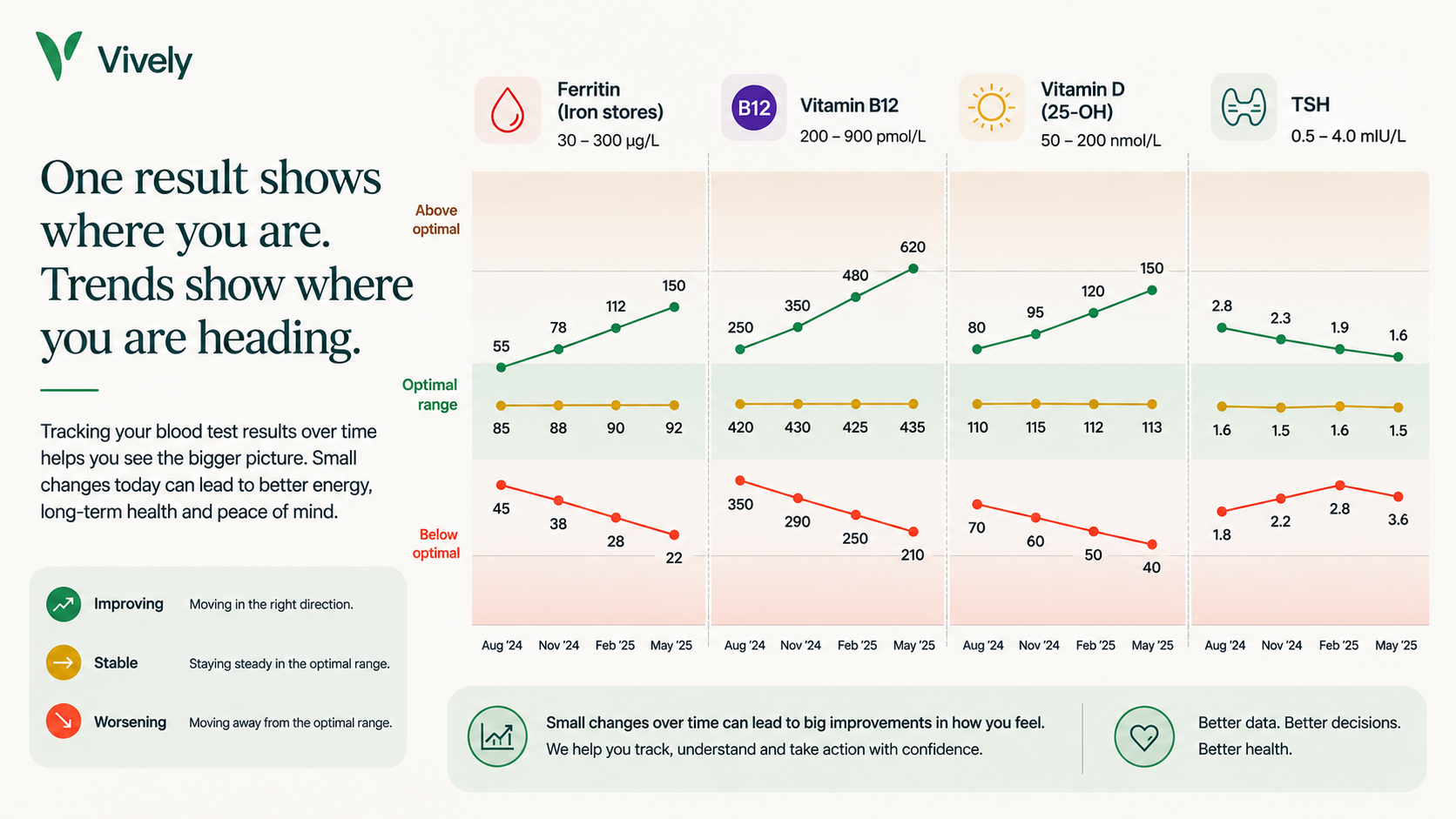
One blood test gives you a snapshot.

Several blood tests over time show your trajectory.

That is where prevention is so important.

Health changes over time. Your testing should reflect that.

Vively’s membership model is built around trajectory. Your Baseline gives you a starting point. Your app tracks meals, workouts, sleep, stress and wearable data.

What makes Vively’s approach different?

Vively is designed for personalised preventative health, not one-off testing.

For $99 per month, Vively’s Baseline Health Check⁠ includes 70+ key markers across 10 health areas, optimal ranges, biological age, holistic dietitian support and a personalised plan.

Your plan can include nutrition, lifestyle, supplements and personalised diagnostics where appropriate.

You can add specialty tests⁠ when deeper insight is needed, including hormone, nutrient, stress and CGM programs.

The Vively platform tracks the behaviours that influence your results, including meals, workouts, sleep, stress and wearable data.

The goal is not to overwhelm you with numbers. The goal is to show what matters, what is changing, and what to do next.

When to speak to a doctor

Blood testing can help you understand your health, but it does not replace medical care.

Speak with a GP or qualified healthcare professional if you have:

  • chest pain
  • shortness of breath
  • fainting
  • unexplained weight loss
  • blood in your stool or urine
  • severe fatigue
  • persistent fever
  • new neurological symptoms
  • severe abdominal pain
  • very abnormal blood test results
  • known medical conditions that need monitoring
  • pregnancy-related concerns
  • symptoms that are worsening

Vively is designed to support preventative health and health optimisation. It does not replace your GP, emergency care or specialist medical advice.

The simplest way to think about blood testing

Do not ask only, “Are my results normal?”

Ask better questions:

  • What does healthy look like for me?
  • What is changing over time?
  • Which markers are moving in the wrong direction?
  • Which patterns explain how I feel?
  • What can I improve with the right plan?
  • What needs medical review?

The most useful blood test is not the one with the longest list of markers. It is the one that helps you understand your health clearly and take the next right step.

That is what Vively is built to do.

FAQs

What blood tests should I get first?

For most people, a comprehensive baseline is the best place to start. It should include full blood count, iron studies, metabolic markers, cholesterol, liver function, kidney function, inflammation, thyroid, nutrients and biological age. Vively’s Baseline Health Check⁠ covers 70+ key markers across 10 health areas.

What blood tests should I get if I am tired all the time?

Useful starting markers include full blood count, ferritin, iron studies, B12, folate, vitamin D, thyroid markers, CRP, liver function, kidney function, fasting glucose, fasting insulin and HbA1c.

What blood tests should I get for weight loss?

Useful markers include fasting insulin, fasting glucose, HbA1c, HOMA-IR, triglycerides, HDL cholesterol, ALT, GGT, TSH, CRP and vitamin D. These help assess metabolic health, liver health, thyroid function and inflammation. A CGM can also help show how your glucose responds to your lifestyle choices. 

What blood tests show insulin resistance?

Fasting insulin, fasting glucose, HbA1c and HOMA-IR are key markers. Triglycerides, HDL cholesterol, ALT, GGT and waist circumference can add useful context. A CGM can also help show how your glucose responds across the day.

What is the difference between normal and optimal blood test ranges?

A normal range usually means your result sits inside the lab reference range. An optimal range helps identify where a marker may sit for better energy, metabolism, recovery and long-term health and the prevention of disease. Optimal ranges are not diagnostic thresholds. They should be interpreted with symptoms, goals, age, medical history and trends over time.

Why do my blood tests look normal if I still feel unwell?

Standard blood tests often look for clear abnormality or disease. You may still have markers that are low-normal, high-normal, trending in the wrong direction or only meaningful when viewed together. Examples include fasting insulin, ferritin, vitamin D, thyroid markers, liver enzymes and inflammation.

How often should I repeat blood tests?

It depends on your goal. If you are actively changing nutrition, exercise, sleep, supplements or weight, retesting every few months can help show whether your plan is working. If things are stable, less frequent testing may be enough. Testing frequency should be guided by your health history, goals, risk factors and practitioner guidance. .

Does Vively replace my GP?

No. Vively does not replace your GP. Vively supports preventative health, testing, personalised insights and behaviour change. You should still see your GP for diagnosis, treatment, prescriptions, urgent symptoms, imaging and medical conditions.

Related Vively links

References

  1. RACGP. Guidelines for preventive activities in general practice
  2. RACGP. Screening tests of unproven benefit
  3. Horowitz GL. Reference intervals: practical aspects
  4. Timbrell NE, et al. The role and limitations of the reference interval within clinical laboratory testing
  5. Acute Care Testing. Reference intervals and percentiles
  6. Australian Bureau of Statistics. Health conditions prevalence, 2022
  7. Vively. Baseline Health Check
  8. Vively. Specialty Add-On Tests
  9. Vively. Test Library

Meet our team.

START YOUR BASELINE

Find out what's actually going on inside your body.

Most of what we write about here shows up in your blood work. A Vively Baseline Health Check covers 60+ biomarkers, reviewed 1:1 with a registered nurse. $99 to start your membership.

Get my baseline · $99

★★★★★ 4.8 rating 30,000+ members Accredited AU labs

Subscribe to our newsletter & join a community of 30,000+ Aussies

Get access to limited content drops, free invites to expert fireside chats, and exclusive offers.

What blood tests should I get?
July 18, 2026

What blood tests should I get?

What blood tests should I get?

Most blood tests are ordered after something feels wrong.

You feel tired. You gain weight. Your sleep changes. Your cholesterol rises. Your doctor orders a test to see whether there is a clear abnormality. If the result sits inside the lab reference range, you may be told everything is normal.

That can be useful. It can also be incomplete.

Many people are not only trying to answer, “Do I have a disease?” They are trying to understand why they feel flat, why their energy is inconsistent, why their weight is changing, why their hormones feel different, why their digestion is off, or whether they are doing all they can to age well.

A useful blood test should do more than look for disease. It should help you understand your current health, what is changing over time, and which markers are worth improving before they become a bigger problem.

Health is not binary. You are not simply healthy or sick. Health sits on a continuum. Your metabolism, inflammation, liver health, immune system, nutrient status, hormones, sleep, stress and cardiovascular risk can shift for years before disease appears.

Vively’s Baseline Health Check⁠ is built around this reality. It checks 70+ key biomarkers across 10 key health areas, including metabolic health, inflammation, heart health, liver health, kidney health, blood health, thyroid, nutrients, and biological age. Your results are reviewed using optimal ranges, not just standard reference ranges, and turned into a personalised plan with support from your Vively health team.

The problem with standard blood testing

Standard blood testing is often reactive. It usually starts after symptoms appear, after risk has increased, or after a medical condition needs investigation.

That is important. Diagnostic testing matters. GP care matters. Medical review matters.

Chronic lifestyle disease is different. The problem is that many people sit in the gap between “not sick enough to diagnose” and “not feeling healthy”.

That gap is where preventative testing matters most.

The RACGP Red Book supports evidence-based screening, case finding and preventive activities in primary care, including prevention, early detection and health education. It also states that screening activities should be recommended where evidence shows benefits outweigh harms. The point is not to test randomly. The point is to test in a way that improves decisions.  

Why “normal” does not always mean healthy

A lab reference range is useful. It helps identify results that may be unusually high or low.

But a reference range is not the same as optimal health.

Reference intervals are commonly based on the spread of values from a reference population, often using the central 95% of results. This means a result can be considered “normal” because it is common in that group, not because it is ideal for your age, symptoms, goals, risk factors or long-term health.  

That distinction matters because population health is not the same as optimal health. In Australia, the ABS reported that 81.4% of people had at least one long-term health condition in the 2022 National Health Survey, and 49.9% had at least one chronic condition.  

A result can be inside range and still be worth improving.

Optimal ranges are not diagnostic thresholds. They help identify what may be worth improving early, what should be monitored and what needs medical review.

The best blood tests to get for a preventative health check

A useful preventative blood test should cover the major systems that affect how you feel, function and age.

Full blood count

A full blood count gives a broad view of your blood cells and immune patterns.

It commonly includes markers such as:

A full blood count can help identify patterns linked to anaemia, infection, inflammation, immune activity, clotting, nutrient issues and oxygen transport.

It is especially useful for fatigue, low energy, exercise performance, frequent illness and general health screening.

A full blood count should not be interpreted on its own. Low haemoglobin, high MCV or abnormal white cells need context from iron studies, B12, folate, inflammation, symptoms and medical history.

Iron studies

Iron studies help assess iron storage, transport and availability.

Useful markers include:

Ferritin is one of the most important iron markers because it reflects stored iron. It can be highly relevant for fatigue, low energy, exercise performance, restless legs, hair shedding, mood and recovery.

Ferritin should not be reviewed alone. It can rise with inflammation, infection, liver stress, metabolic dysfunction or possible iron overload. That is why it should be interpreted alongside CRP, transferrin saturation, full blood count and liver enzymes.

Relevant Vively links:

Metabolic health markers

Metabolic health is one of the most important areas to check.

It affects energy, hunger, cravings, weight, liver health, cardiovascular risk and long-term health.

Useful markers include:

Fasting glucose and HbA1c are useful, but they can miss early insulin resistance. Fasting insulin can show metabolic strain earlier because insulin may rise to keep glucose controlled.

That is why someone can be told their glucose is fine while still gaining weight, feeling tired after meals or struggling with cravings.

Relevant Vively links:

Cholesterol and heart health markers

A standard lipid panel is useful, but it is not always the full picture.

Useful markers include:

Cholesterol should not be reviewed in isolation. The pattern matters.

High triglycerides, low HDL, elevated fasting insulin and raised liver enzymes can point to a metabolic pattern. LDL cholesterol may be more meaningful when interpreted with ApoB, non-HDL cholesterol, family history, blood pressure, smoking status, inflammation and overall risk. Learning about your Omega 3 fatty acids, may also be a worthwhile addition.

Liver function markers

Liver markers can reveal patterns linked to fatty liver, alcohol, medication, supplements, metabolic dysfunction and inflammation.

Useful markers include:

Mild liver enzyme changes are common. They should not be ignored, especially if they are trending upwards over time.

ALT, AST and GGT are often worth reviewing alongside waist circumference, triglycerides, fasting insulin, HbA1c, alcohol intake, medication, supplements and sleep.

The point is not to panic over one result. The point is to understand the pattern and, more importantly, lifestyle changes that can make a difference

Kidney function and electrolytes

Kidney markers help assess filtration, fluid balance and metabolic health.

Useful markers include:

Kidney markers are especially important for people with high blood pressure, diabetes risk, cardiovascular risk, high protein intake, medication use or known kidney concerns.

eGFR should be interpreted with age, muscle mass, hydration, medication and medical history.

Inflammation markers

Inflammation markers are useful, but they are not specific.

Useful markers include:

  • hs-CRP
  • CRP
  • ESR, where appropriate
  • white blood cell pattern
  • ferritin, in context

A high CRP does not tell you the cause. It may relate to infection, injury, autoimmune activity, dental issues, poor sleep, excess body fat, metabolic dysfunction or other inflammatory states.

When inflammation is persistently elevated, it is worth understanding why.

Relevant Vively link:

Thyroid markers

Thyroid function can affect energy, weight, mood, temperature, hair, digestion, fertility and cognition regularity, cholesterol and recovery.

Useful markers may include:

  • TSH
  • free T4
  • free T3, where appropriate
  • thyroid antibodies, where clinically relevant

TSH is a useful starting point. It is not always the full thyroid picture.

Thyroid markers should be interpreted with symptoms, age, pregnancy status, medications, iodine status, iron, stress, sleep and broader metabolic health.

Relevant Vively link:

  • TSH Test⁠

Nutrient markers

Nutrient status can affect energy, mood, immunity, bone health, exercise recovery, inflammation, metabolism, gut health, cognition and long-term health.

Useful markers include:

  • vitamin D
  • vitamin B12
  • folate
  • ferritin and iron studies
  • magnesium, where available
  • zinc, where clinically relevant

Nutrient results should be interpreted with diet, symptoms, supplement use, gut health, medications and absorption issues.

Relevant Vively links:

  • Vitamin D Test⁠
  • Vitamin B12 Test⁠
  • Ferritin Test⁠

Hormone markers

Hormone testing should be targeted.

The right markers depend on sex, age, symptoms, cycle timing, life stage, contraception, medications, stress, sleep, body composition and the clinical question.

Cycle timing matters for women.

Testosterone should not be interpreted without sleep, stress, alcohol intake, training load, body composition, medications, liver health and insulin resistance. Because levels fluctuate, testing on more than one day is also recommended.

Relevant Vively links:

Biological age markers

Biological age can help summarise broader patterns linked to ageing and long-term health.

It is not a diagnosis. It is a tracking signal.

Vively includes biological age in the Baseline Health Check⁠. The value is not just the age number. The value is understanding the underlying markers that influence it.

These often include markers linked to:

The goal is not to chase a perfect biological age. The endgame is preventing or stalling chronic disease

Relevant Vively link:

What blood tests should I get for my goal?

The right blood tests depend on what you are trying to understand.

If you are tired all the time

Consider checking:

  • full blood count
  • ferritin and iron studies
  • B12
  • folate
  • vitamin D
  • TSH
  • free T4, where appropriate
  • CRP or hs-CRP
  • liver function
  • kidney function
  • fasting glucose
  • fasting insulin
  • HbA1c

Fatigue is rarely explained by one marker. Low iron, low B12, low vitamin D, thyroid patterns, inflammation, poor sleep, blood sugar instability and liver stress can all contribute.

Relevant Vively links:

This list is a guide only and isn't exhaustive. Some results may need further interpretation or assessment with your GP.

If you are gaining weight or struggling to lose weight

Consider checking:

  • fasting insulin
  • fasting glucose
  • HbA1c
  • HOMA-IR
  • triglycerides
  • HDL cholesterol
  • ALT
  • GGT
  • TSH
  • vitamin D
  • CRP

Weight is not just about calories. Insulin resistance, sleep, stress, hormones, liver health, gut health, appetite, training load and body composition can all influence the pattern.

Relevant Vively links:

If you want to understand insulin resistance

Consider checking:

  • fasting insulin
  • fasting glucose
  • HbA1c
  • HOMA-IR
  • triglycerides
  • HDL cholesterol
  • ALT
  • GGT
  • CRP

Waist circumference and blood pressure are also useful, even though they are not blood tests.

CGM can add more context by showing how your glucose responds to meals, sleep, stress and exercise.

Relevant Vively links:

If you are worried about cholesterol or heart health

Consider checking:

  • total cholesterol
  • LDL cholesterol
  • HDL cholesterol
  • triglycerides
  • non-HDL cholesterol
  • ApoB, where available
  • lipoprotein(a), where appropriate
  • CRP or hs-CRP
  • HbA1c
  • fasting insulin
  • liver function
  • kidney function

Cholesterol should be interpreted with the broader risk picture, including blood pressure, smoking, family history, diabetes risk, inflammation, metabolic health and body composition. CGM data can add to this, as high glucose variability, particularly frequent lows, is linked with increased cardiovascular risk.

If you want a longevity or preventative health baseline

Consider checking:

  • full blood count
  • iron studies
  • fasting glucose
  • fasting insulin
  • HbA1c
  • lipids
  • ApoB, where available
  • liver function
  • kidney function
  • inflammation
  • thyroid
  • vitamin D
  • B12
  • folate
  • biological age

This is where a broad baseline makes sense.

Start with:

If you are a woman in your 30s, 40s or 50s

Consider checking:

  • full blood count
  • iron studies
  • ferritin
  • vitamin D
  • B12
  • folate
  • TSH
  • free T4, where appropriate
  • fasting insulin
  • HbA1c
  • lipids
  • liver function
  • inflammation
  • hormones where symptoms or life stage justify it

Perimenopause is not diagnosed by one blood test. Symptoms, cycle changes, age and context matter heavily.

Blood tests can still be useful because they help identify other contributors to fatigue, mood changes, weight gain, low libido, poor sleep and cycle changes.

Relevant Vively links:

If you are a man in your 30s, 40s or 50s

Consider checking:

  • full blood count
  • ferritin and iron studies
  • fasting insulin
  • HbA1c
  • lipids
  • liver function
  • kidney function
  • CRP
  • vitamin D
  • B12
  • TSH
  • testosterone markers where symptoms justify it

Men often undercheck metabolic health, liver markers and cardiovascular risk until problems are already visible.

A preventative baseline can help show where risk may be building earlier.

Relevant Vively links:
Which blood tests should you prioritise?

Why trends matter more than one result

One blood test gives you a snapshot.

Several blood tests over time show your trajectory.

That is where prevention is so important.

Health changes over time. Your testing should reflect that.

Vively’s membership model is built around trajectory. Your Baseline gives you a starting point. Your app tracks meals, workouts, sleep, stress and wearable data.
What makes Vively’s approach different?

Vively is designed for personalised preventative health, not one-off testing.

For $99 per month, Vively’s Baseline Health Check⁠ includes 70+ key markers across 10 health areas, optimal ranges, biological age, holistic dietitian support and a personalised plan.

Your plan can include nutrition, lifestyle, supplements and personalised diagnostics where appropriate.

You can add specialty tests⁠ when deeper insight is needed, including hormone, nutrient, stress and CGM programs.

The Vively platform tracks the behaviours that influence your results, including meals, workouts, sleep, stress and wearable data.

The goal is not to overwhelm you with numbers. The goal is to show what matters, what is changing, and what to do next.

When to speak to a doctor

Blood testing can help you understand your health, but it does not replace medical care.

Speak with a GP or qualified healthcare professional if you have:

  • chest pain
  • shortness of breath
  • fainting
  • unexplained weight loss
  • blood in your stool or urine
  • severe fatigue
  • persistent fever
  • new neurological symptoms
  • severe abdominal pain
  • very abnormal blood test results
  • known medical conditions that need monitoring
  • pregnancy-related concerns
  • symptoms that are worsening

Vively is designed to support preventative health and health optimisation. It does not replace your GP, emergency care or specialist medical advice.

The simplest way to think about blood testing

Do not ask only, “Are my results normal?”

Ask better questions:

  • What does healthy look like for me?
  • What is changing over time?
  • Which markers are moving in the wrong direction?
  • Which patterns explain how I feel?
  • What can I improve with the right plan?
  • What needs medical review?

The most useful blood test is not the one with the longest list of markers. It is the one that helps you understand your health clearly and take the next right step.

That is what Vively is built to do.

FAQs

What blood tests should I get first?

For most people, a comprehensive baseline is the best place to start. It should include full blood count, iron studies, metabolic markers, cholesterol, liver function, kidney function, inflammation, thyroid, nutrients and biological age. Vively’s Baseline Health Check⁠ covers 70+ key markers across 10 health areas.

What blood tests should I get if I am tired all the time?

Useful starting markers include full blood count, ferritin, iron studies, B12, folate, vitamin D, thyroid markers, CRP, liver function, kidney function, fasting glucose, fasting insulin and HbA1c.

What blood tests should I get for weight loss?

Useful markers include fasting insulin, fasting glucose, HbA1c, HOMA-IR, triglycerides, HDL cholesterol, ALT, GGT, TSH, CRP and vitamin D. These help assess metabolic health, liver health, thyroid function and inflammation. A CGM can also help show how your glucose responds to your lifestyle choices. 

What blood tests show insulin resistance?

Fasting insulin, fasting glucose, HbA1c and HOMA-IR are key markers. Triglycerides, HDL cholesterol, ALT, GGT and waist circumference can add useful context. A CGM can also help show how your glucose responds across the day.

What is the difference between normal and optimal blood test ranges?

A normal range usually means your result sits inside the lab reference range. An optimal range helps identify where a marker may sit for better energy, metabolism, recovery and long-term health and the prevention of disease. Optimal ranges are not diagnostic thresholds. They should be interpreted with symptoms, goals, age, medical history and trends over time.

Why do my blood tests look normal if I still feel unwell?

Standard blood tests often look for clear abnormality or disease. You may still have markers that are low-normal, high-normal, trending in the wrong direction or only meaningful when viewed together. Examples include fasting insulin, ferritin, vitamin D, thyroid markers, liver enzymes and inflammation.

How often should I repeat blood tests?

It depends on your goal. If you are actively changing nutrition, exercise, sleep, supplements or weight, retesting every few months can help show whether your plan is working. If things are stable, less frequent testing may be enough. Testing frequency should be guided by your health history, goals, risk factors and practitioner guidance. .

Does Vively replace my GP?

No. Vively does not replace your GP. Vively supports preventative health, testing, personalised insights and behaviour change. You should still see your GP for diagnosis, treatment, prescriptions, urgent symptoms, imaging and medical conditions.

Related Vively links

References

  1. RACGP. Guidelines for preventive activities in general practice
  2. RACGP. Screening tests of unproven benefit
  3. Horowitz GL. Reference intervals: practical aspects
  4. Timbrell NE, et al. The role and limitations of the reference interval within clinical laboratory testing
  5. Acute Care Testing. Reference intervals and percentiles
  6. Australian Bureau of Statistics. Health conditions prevalence, 2022
  7. Vively. Baseline Health Check
  8. Vively. Specialty Add-On Tests
  9. Vively. Test Library

Get irrefutable data about your diet and lifestyle by using your own glucose data with Vively’s CGM Program. We’re currently offering a 20% discount for our annual plan. Sign up here.

Tim Veron

Co-Founder & CEO

Vively is reimagining how healthcare is delivered with the world's first online holistic healthcare clinic.

Join Vively's CGM Program

Achieve your health goals using your glucose data

JOIN NOW

Read this next